Importance of incident reporting in healthcare

In the healthcare industry, incident reporting is much more than an administrative task. It is the cornerstone of a high-functioning safety culture. Understanding why we report is just as important as knowing how to report. By consistently documenting events, healthcare organizations can transform individual mistakes into organizational learning, ensuring that every patient receives the safest care possible.

Our incident reporting software for healthcare organizations
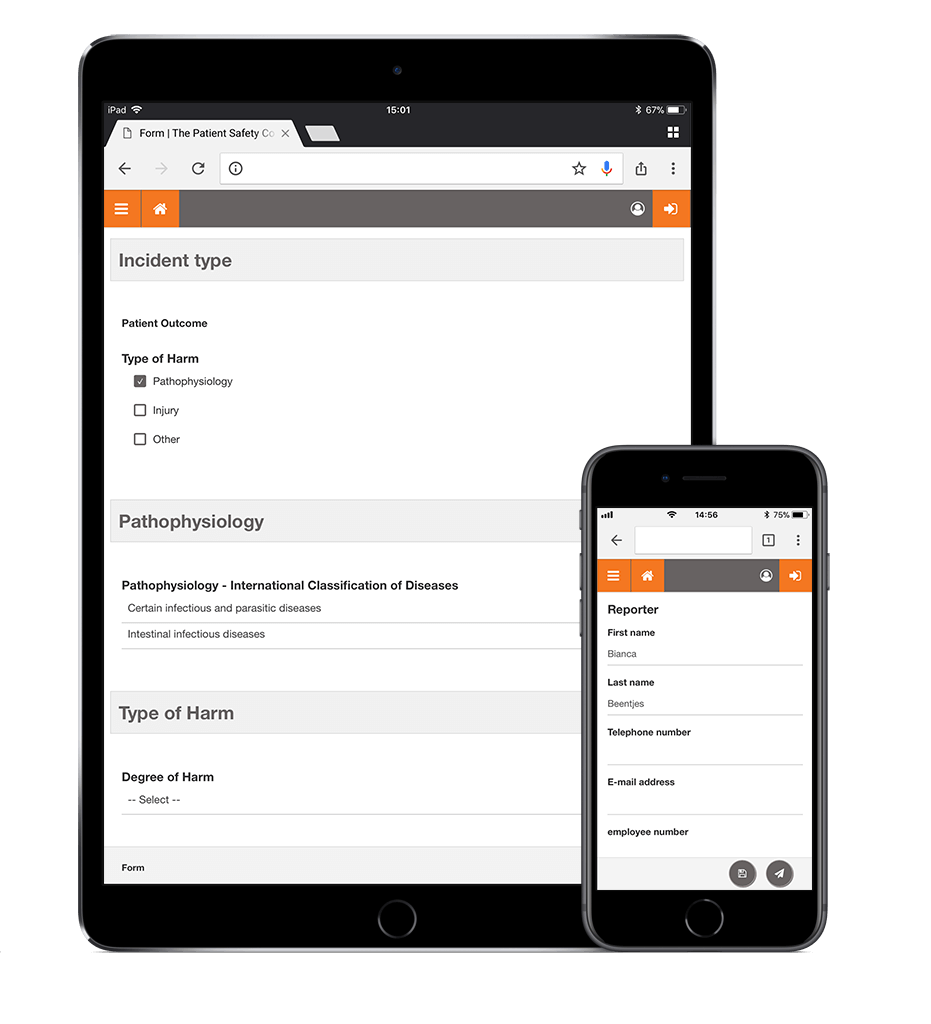
The TPSC Cloud™ incident reporting software is designed to be as fast and flexible as the teams who use it. We provide a digital incident reporting system in healthcare settings that eliminates the frustration of paper forms and manual data entry.
- Easy access: Access our software from any workstation or mobile device in the ward.
- Time-saving forms: Smart, intuitive forms only show relevant questions, allowing you to complete a report in minutes.
- Real-time feedback: Receive automated updates so you can see exactly how your report is being used to improve safety in your department.
Why are incident reports important in healthcare?
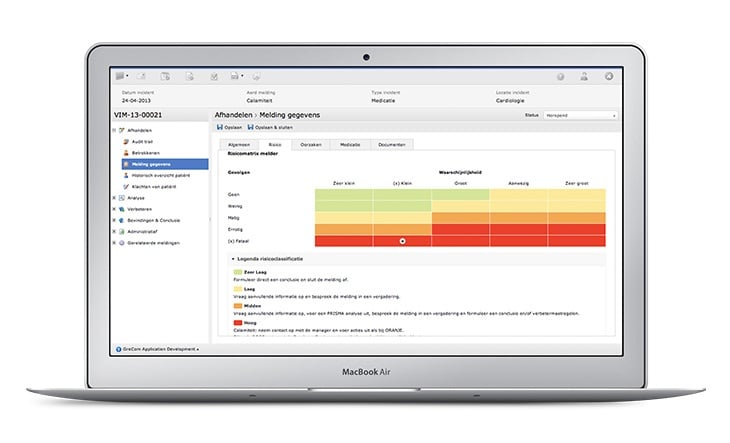
Incident reports are crucial in healthcare as they help identify, analyze, and prevent adverse events. By thoroughly documenting incidents, healthcare providers can improve patient safety and enhance the quality of care. This proactive approach fosters a culture of safety and accountability, ultimately benefiting both patients and healthcare teams by reducing risks before they lead to harm.
Completing an incident report is important because it enhances patient safety, improves care processes, and fosters a culture of transparency. By documenting incidents, you can identify trends, mitigate risks, and promote best practices. This process ultimately leads to better outcomes for patients and a safer healthcare environment for everyone involved.
Reporting all errors—including minor mistakes and near-misses—is crucial for identifying specific training needs and enhancing overall patient safety. Accurate records enable you to analyze patterns, implement preventive measures, and improve the standard of care. Additionally, thorough documentation may be necessary for any formal complaints or legal actions that arise, ensuring accountability and transparency in healthcare practices.
Completing incident reports is essential to maintain a safe and compliant workplace. These reports help you identify long-term trends and analyze root causes, enabling you to implement necessary structural changes. By learning from past incidents, you can prevent future occurrences and foster a sustainable culture of safety within your organization.
Using incident management software to simplify incident reporting
Despite the availability of incident reporting systems, many healthcare organizations still rely on manual, paper-based incident reporting, often using hand-written reports. Manual incident reporting is a time-consuming, costly, error-prone process that has many limitations, including low-quality data and limited flexibility.
Collecting incident data is just the first step in the incident management process. To identify and correct safety problems, the right people have to be able to access, sort, organize and analyze that incident data, something that is very challenging—if not impossible—when using paper reports.
To take full advantage of incident reporting, use incident management software that collects incident data electronically, stores that data in a central database, and analyzes it using proven methods.
Purpose of incident reporting in healthcare
The primary purpose of incident reporting is to facilitate continuous improvement through data-driven insights. It serves to move healthcare away from a "blame culture" toward a "just culture," where the focus is on identifying systemic weaknesses rather than individual failings. By aggregating incident data, organizations can prioritize resources for the areas that present the highest risk to patient safety.
Importance of incident reporting in nursing
For nurses, incident reporting is a vital tool for advocacy and professional responsibility. Because nurses are often the final link in the chain of care delivery, their reports provide the most detailed insights into how protocols work in practice. Accurate reporting by nursing staff ensures that the challenges they face at the bedside are recognized by management and addressed through better staffing, improved equipment, or clearer procedures.
Schedule a free online demo or discuss your needs with a specialist.
-
Learn things like creating an incident reporting form
-
See how easily you can analyse incidents and quality-related data

Our valued customers include