Incident reporting in nursing
In the nursing profession, being at the bedside means you are often the first to witness unexpected events. Accurate incident reporting for nurses is not just a regulatory requirement; it is a fundamental part of providing high-quality care. By documenting near-misses and actual incidents, nurses provide the data necessary to identify systemic issues and prevent future harm to patients and staff alike.

Our incident reporting software for nursing
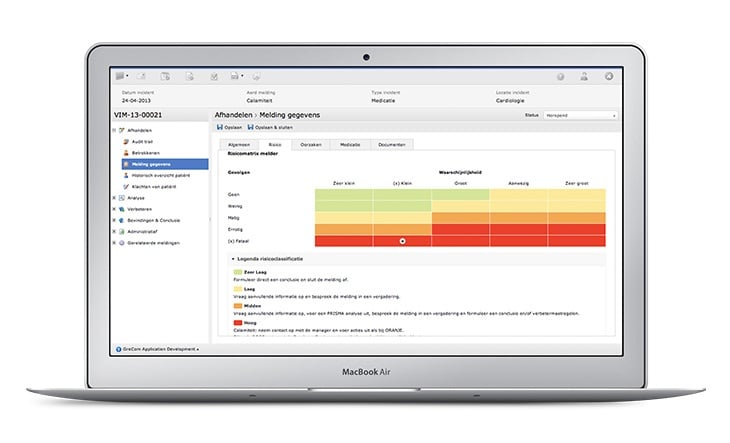
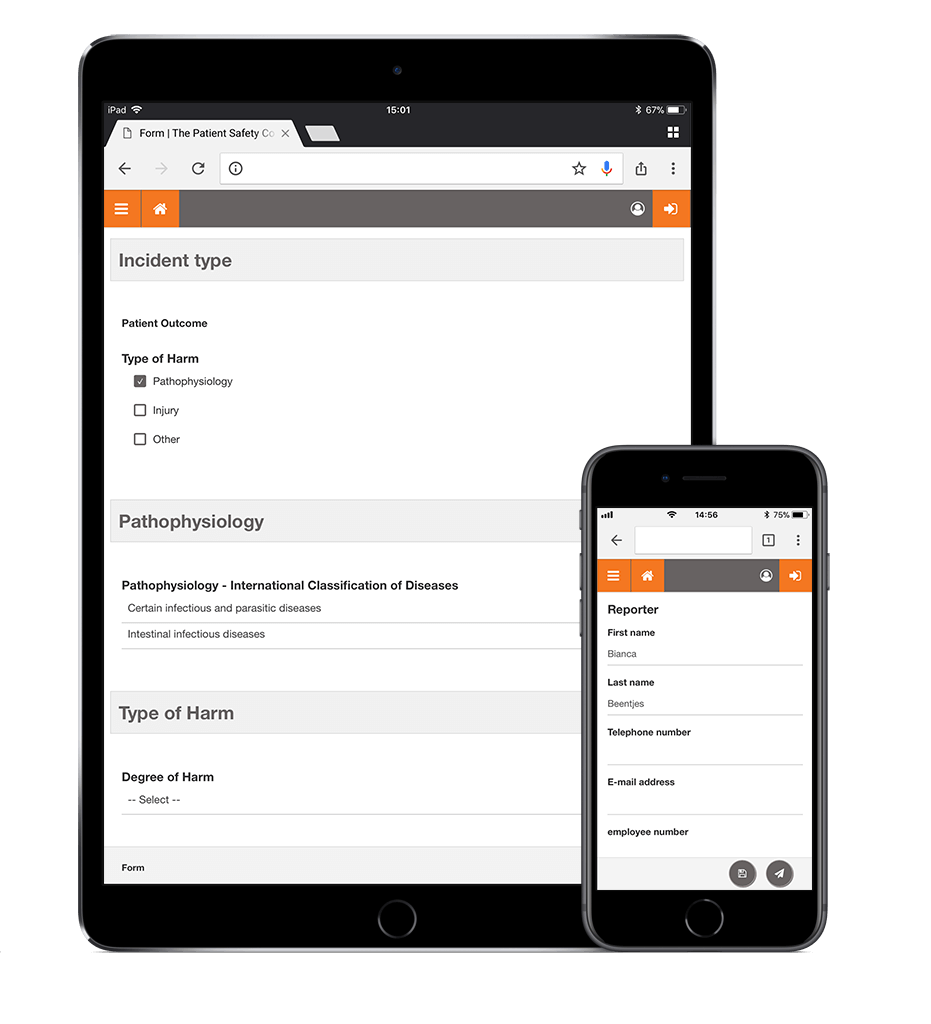
The TPSC Cloud™ incident reporting software is designed to be as fast and flexible as the teams who use it. We provide a digital incident reporting system in healthcare settings that eliminates the frustration of paper forms and manual data entry.
- Easy access: Access our software from any workstation or mobile device in the ward.
- Time-saving forms: Smart, intuitive forms only show relevant questions, allowing you to complete a report in minutes.
- Real-time feedback: Receive automated updates so you can see exactly how your report is being used to improve safety in your department.
What is an incident report in nursing?
An incident report is a formal document that captures details of unexpected events that affect patients, staff, or family members. These reports highlight safety issues, promote learning, and guide improvements, ensuring that healthcare environments continuously enhance patient safety and care quality. It serves as an objective record of what occurred, serving both as a legal document and a tool for quality management.
How to write an incident report in nursing?
To write an incident report, start by clearly stating the facts: what happened, when, where, and who was involved. Include your direct observations, immediate actions taken (such as notifying a physician or providing first aid), and the final outcome of the event. Use concise language and remain objective, avoiding personal opinions or assigning blame. Lastly, follow your facility's specific reporting procedures to ensure compliance with healthcare standards.
How to write incident reports: a sample
To support nursing teams with accurate documentation, we have developed a specialized nursing incident report checklist. This example highlights the specific clinical details that nurses need to capture:
- Patient Information: Full name, date of birth, and hospital ID number.
- Other Affected Individuals: Names of staff members or visitors involved.
- Time and Place: Exact date, time, and specific location of the incident.
- Facility Details: Name and address of the facility where the event occurred.
- Incident Type: Categorization of the event, such as a medication error, fall, or equipment failure.
- Factual Description: A brief description of the incident, written in chronological order.
- Witnesses: Names and contact information of any individuals who saw the event.
- Impact Assessment: Details and total cost of any injury or damage that occurred.
- Immediate Action: A summary of the actions taken at the time of the incident.
- Notification: The name of the physician who was notified.
- Reporter Details: Name and contact information of the person reporting the incident (if appropriate).
By utilizing this structured approach in your sample reports, you ensure that all critical data is captured. This allows healthcare organizations to focus on analysis and the prevention of future occurrences, rather than filling in missing information.
Using incident management software to simplify incident reporting
Despite the availability of incident reporting systems, many healthcare organizations still rely on manual, paper-based incident reporting, often using hand-written reports. Manual incident reporting is a time-consuming, costly, error-prone process that has many limitations, including low-quality data and limited flexibility.
Collecting incident data is just the first step in the incident management process. To identify and correct safety problems, the right people have to be able to access, sort, organize and analyze that incident data, something that is very challenging—if not impossible—when using paper reports.
To take full advantage of incident reporting, use incident management software that collects incident data electronically, stores that data in a central database, and analyzes it using proven methods.
What is included in an incident report in nursing?
An incident report in nursing typically includes critical details such as the date, time, and location of the event, the name of the affected person, witness names, and the notifying parties (like the attending physician). It also documents the individual's condition immediately after the incident and any visible injuries or lack thereof, to ensure thorough communication and medical follow-up.
Types of incident reports in nursing
In a nursing context, reports can vary based on the nature of the event. Common types include:
- Clinical Incidents: Medication errors, patient falls, or pressure ulcers.
- Safety Incidents: Needle-stick injuries, exposure to hazardous materials, or equipment failure.
- Behavioral Incidents: Verbal or physical aggression from patients or visitors.
- Near-misses: Situations where an error was caught just before it reached the patient.
Purpose of incident report in nursing
The primary purpose of an incident report is to facilitate organizational learning and improve patient outcomes. Rather than being a punitive tool, it allows nursing management to identify patterns, such as recurring medication errors during shift changes, and implement structural changes like updated protocols or additional training. Ultimately, it empowers nurses to contribute to a culture of safety where transparency is valued above all else.
Schedule a free online demo or discuss your needs with a specialist.
-
Learn things like creating an incident reporting form
-
See how easily you can analyse incidents and quality-related data

Our valued customers include