Types of incident reports in healthcare

Incident reporting is a critical part of improving patient safety and maintaining quality of care in healthcare. Done effectively, it supports a proactive safety culture focused on learning, prevention, and continuous improvement. Understanding the different types of incident reports helps you to respond appropriately to safety concerns and strengthen overall risk management processes.

Our incident reporting software for healthcare organizations
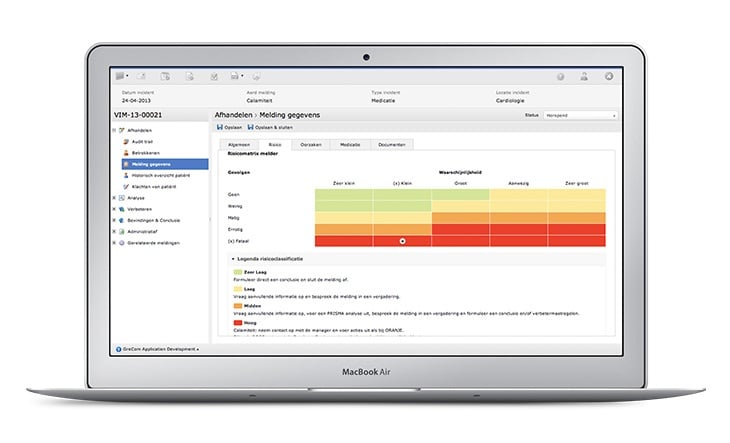
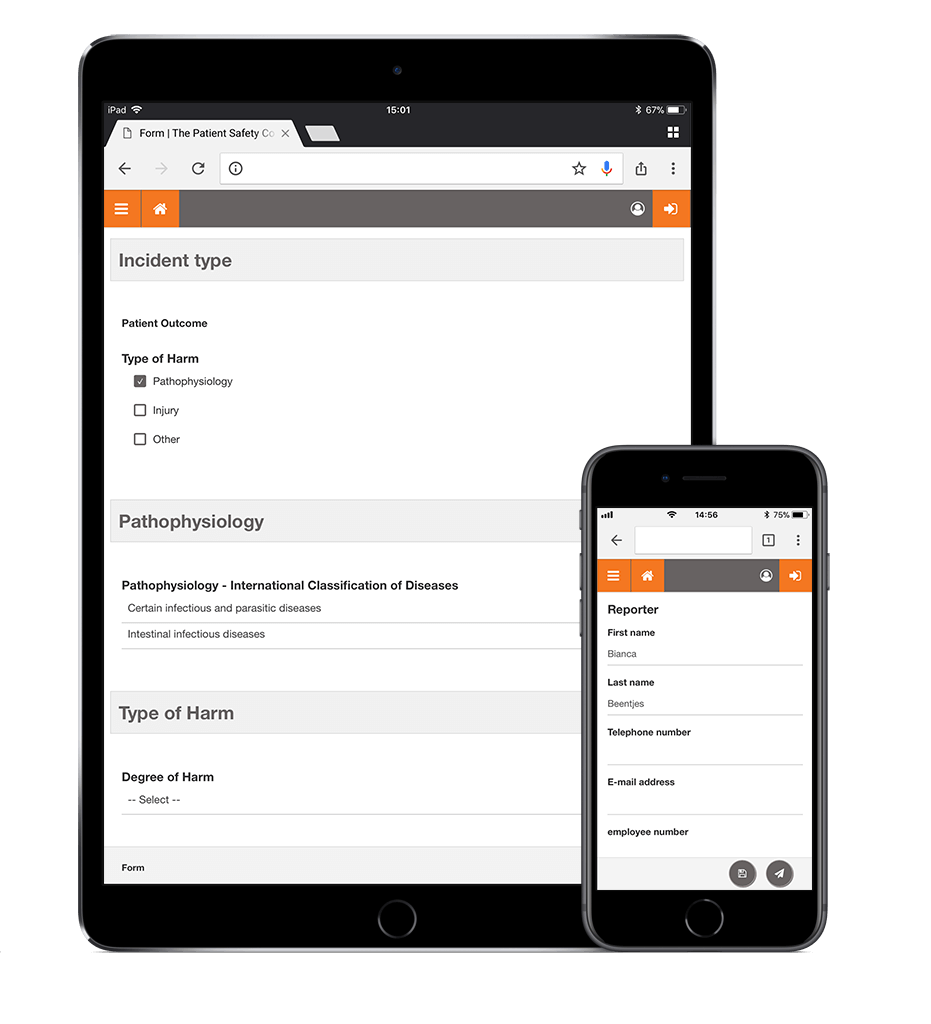
The TPSC Cloud™ incident reporting software is designed to be as fast and flexible as the teams who use it. We provide a digital incident reporting system in healthcare settings that eliminates the frustration of paper forms and manual data entry.
- Easy access: Access our software from any workstation or mobile device in the ward.
- Time-saving forms: Smart, intuitive forms only show relevant questions, allowing you to complete a report in minutes.
- Real-time feedback: Receive automated updates so you can see exactly how your report is being used to improve safety in your department.
What are the three incident types in healthcare?
The three main incident reporting types in healthcare are adverse events (1), no-harm events (2), and hazardous conditions (3).
1. Adverse events
Adverse events lead to patient harm, such as a fall resulting in injury. These events may range from temporary injuries to severe complications. Common examples include medication errors that cause side effects, patient falls resulting in fractures, surgical complications, or healthcare-associated infections. Adverse events can occur because of human error, system failures, communication breakdowns, or unexpected complications during care.
2. No-harm events
No-harm events do not cause injuries but indicate potential risks. Although no actual harm occurs, these events highlight vulnerabilities within healthcare systems and situations where patients could have been harmed under slightly different circumstances. Examples include administering the wrong medication dose that fortunately causes no reaction, or delayed treatment that does not negatively affect the patient’s condition.
3. Hazardous conditions
Hazardous conditions, on the other hand, represent unsafe situations that may lead to harm if left unaddressed. These events may not involve a patient directly, but they still represent risks within the healthcare environment. Examples include malfunctioning medical equipment, inadequate staffing levels, a lack of safety protocols, or unclear medication labeling.
What are the three types of incident reports?
Apart from the type of incident, there are also three main types of incident reports: security incident reports (1), injury and lost time incident reports (2), and exposure incident reports (3). Each type serves a unique purpose in improving patient safety. Together, these reports support safer working environments and contribute to improved patient and staff safety.
1. Security incident reports
Security incident reports document breaches in security protocols, such as unauthorized access to patient information, theft, workplace violence, or cyber incidents.
2. Injury and lost time incident reports
Injury and lost time incident reports detail workplace injuries that result in missed work or restricted duties, helping organizations identify and reduce occupational risks.
3. Exposure incident reports
Lastly, exposure incident reports focus on situations involving potential contamination or health hazards, including exposure to infectious diseases, chemicals, or other hazardous materials.
What are the two most common types of reports in healthcare?
The two most common types of reports in healthcare are medication errors (1) and patient falls (2). Research indicates that these incidents occur frequently, emphasizing the need for effective reporting systems. Understanding these events can help improve the overall quality of care by identifying patterns, improving prevention strategies, and implementing measures that reduce future risks and enhance patient outcomes.
1. Medication errors
Medication error reports document mistakes involving prescribing, dispensing, administering, or monitoring medications. These errors may include incorrect dosages, wrong medications, or missed administrations.
2. Patient fall reports
Patient fall reports focus on incidents where patients fall during care, potentially resulting in injuries, longer hospital stays, or additional treatment.
Using incident management software to simplify incident reporting
Despite the availability of incident reporting systems, many healthcare organizations still rely on manual, paper-based incident reporting, often using hand-written reports. Manual incident reporting is a time-consuming, costly, error-prone process that has many limitations, including low-quality data and limited flexibility.
Collecting incident data is just the first step in the incident management process. To identify and correct safety problems, the right people have to be able to access, sort, organize and analyze that incident data, something that is very challenging—if not impossible—when using paper reports.
To take full advantage of incident reporting, use incident management software that collects incident data electronically, stores that data in a central database, and analyzes it using proven methods.
Discover all benefits of incident reporting
-
Learn things like creating an incident reporting form
-
See how easily you can analyse incidents and quality-related data

Our valued customers include