Types of incidents in Healthcare
Not every healthcare incident results in harm. Some are caught before they reach a patient, others reach the patient without causing harm, and some result in injury or reveal conditions that put patient safety at risk.
Understanding the different types of incidents in healthcare helps professionals classify and report events consistently. It also enables organizations to recognize risks, investigate incidents and identify opportunities to improve patient safety.

Our incident management software for healthcare
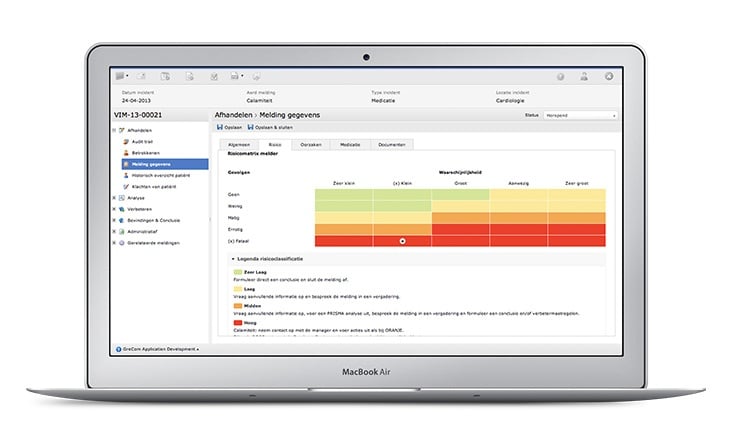
The TPSC Cloud™ incident management software is designed to be as fast and flexible as the teams who use it. We provide a digital incident management system in healthcare that eliminates the frustration of paper forms and manual data entry.
- Easy access: Access our software from any workstation or mobile device in the ward.
- Time-saving forms: Smart, intuitive forms only show relevant questions, allowing you to complete a report in minutes.
- Real-time feedback: Receive automated updates so you can see exactly how your report is being used to improve safety in your department.
Types of incident management
Incident management in healthcare involves identifying, reporting, assessing and investigating incidents, and using the findings to improve patient safety.
Consistent classification helps organizations understand what happened, assess actual or potential harm and determine the appropriate follow-up. Although terminology can vary between organizations and reporting frameworks, incidents are commonly grouped into four categories:
- Near-miss incidents
Events that could have caused harm but were prevented before reaching the patient. - No-harm incidents
Events that reached the patient without causing detectable harm. - Adverse events
Events that resulted in unintended harm to the patient. - Hazardous conditions
Circumstances that increase the risk of an incident or harm occurring.
Each category provides a different perspective on patient safety, from identifying potential risks to understanding incidents that have already caused harm.
-
A near-miss incident is an event that could have caused harm but was prevented before reaching the patient. This may happen because a healthcare professional identifies an error in time, a safety check catches a problem, or another safeguard prevents the event from progressing.
Near misses can occur across many areas of healthcare, including medication administration, patient identification, communication and clinical procedures. Although no harm occurs, these events can reveal vulnerabilities in existing processes or show where safety measures are working as intended.
Reporting near-miss incidents helps healthcare organizations identify potential risks before they lead to patient harm. By examining what almost went wrong, teams can recognize recurring issues, strengthen safeguards and improve the reliability of care.
-
A no-harm incident occurs when an event reaches the patient but does not result in detectable harm. For example, a patient may receive an incorrect medication dose without experiencing any observable adverse effects.
The absence of harm does not necessarily mean that the process was safe. The same incident could have had a different outcome under slightly different circumstances. No-harm incidents can therefore provide valuable insight into weaknesses in procedures, communication or other aspects of care.
Reporting these events helps organizations identify patterns and determine whether further investigation or corrective action is needed. Treating no-harm incidents as learning opportunities supports a more proactive approach to patient safety.
-
An adverse event is an incident that results in unintended harm to a patient. The consequences can vary in severity, from temporary injury or complications to more serious outcomes that require additional treatment or prolonged care.
Adverse events can arise from different contributing factors, including communication breakdowns, medication errors, procedural issues or weaknesses in care processes. An adverse event does not automatically mean that a healthcare professional was negligent; understanding what happened requires careful assessment of the circumstances.
Investigating adverse events helps healthcare organizations identify contributing factors, understand why existing safeguards did not prevent harm and determine which improvements may reduce the likelihood of similar events occurring again. The focus is on learning from what happened and strengthening the systems that support safe care.
-
A hazardous condition is a circumstance that increases the risk of an incident or patient harm. Unlike other incident categories, a hazardous condition can exist even when no specific incident has occurred and no patient has been affected.
Examples include incorrectly labelled medication, malfunctioning equipment, unsafe storage practices, environmental hazards or staffing and workflow issues that make errors more likely. These conditions can create risks that remain unnoticed until an incident occurs.
Reporting hazardous conditions allows healthcare organizations to identify and address risks before they result in harm. By taking preventive action, teams can improve working conditions, strengthen safety procedures and reduce the likelihood of future incidents.
Incident examples in healthcare
The examples below illustrate the key differences between the four types of incidents in healthcare. They also show why the outcome and circumstances of an event matter when classifying incidents. The same underlying issue can fall into different categories depending on whether it reaches the patient and whether harm occurs.
| Incident type | Example | Key distinction |
| Near-miss incident | An incorrect medication dose is caught before administration. | The event is intercepted before reaching the patient. |
| No-harm incident | A patient receives an incorrect dose but experiences no detectable harm. | The event reaches the patient without detectable harm. |
| Adverse event | A patient receives an incorrect dose and develops a complication. | The event results in unintended harm. |
| Hazardous condition | Incorrect medication labelling creates a risk of selecting the wrong dose. | A risk exists, even if no incident has occurred. |
From incident reporting to safer care
Classifying an incident is the first step. Turning what happened into meaningful improvements is what helps healthcare organizations strengthen patient safety over time.
The Patient Safety Company supports healthcare organizations in managing incident reports, tracking follow-up actions and gaining insight into patient safety risks. By bringing reporting and follow-up together, organizations can make it easier to identify patterns, learn from incidents and act on opportunities for improvement.
Want to see how incident management software can support your organization?
-
Learn things like creating an incident reporting form
-
See how easily you can analyse incidents and quality-related data

Our valued customers include